
Glow Stack Peptide Blend
Three peptides. Third-party verified for purity and accurate dosing, shipped, and ready to reconstitute. Made in the USA.
What Is the Glow Stack?
The Glow Stack is a three-peptide research blend built around BPC-157, TB-500, and GHK-Cu — the combination researchers shorthand as “GLOW.”
Each is studied for a different lane of recovery: localized tissue repair, systemic cell migration, and skin and collagen support. We supply the trio together as lyophilized powder for reconstitution, so labs can investigate the stack the way the literature most often references it — as one system, not three separate orders.
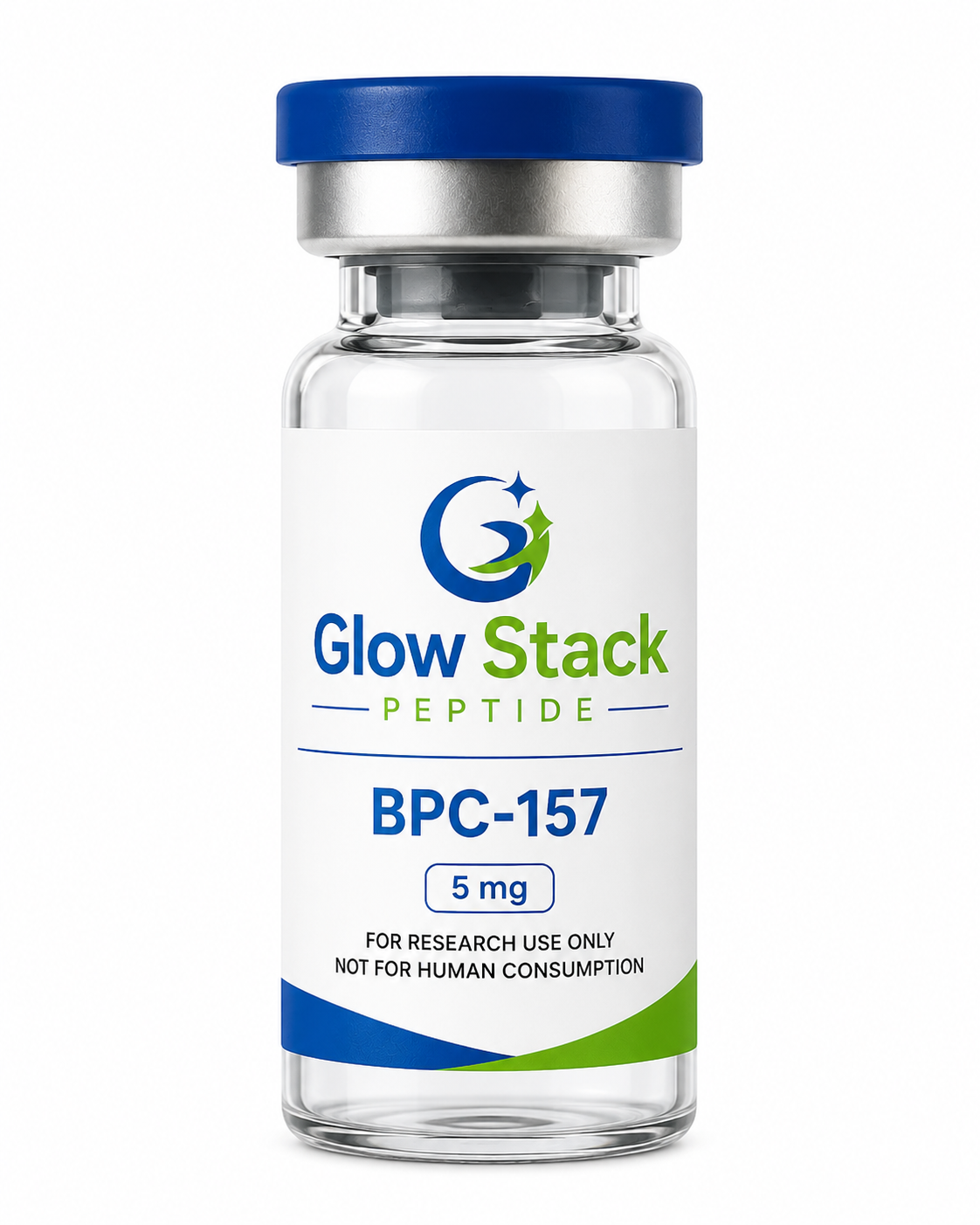
1. BPC-157
For Repair & Recovery
Studied in preclinical models for proposed roles in angiogenesis, connective-tissue repair, and recovery signaling.
BPC-157 is a synthetic peptide derived from a protective protein found in gastric juice. The letters stand for Body Protection Compound, which tells you how it earned its reputation. In preclinical models it’s studied for its proposed role in angiogenesis, the formation of new blood vessels, and for how that process appears to support connective-tissue and gut-lining repair.
It’s the workhorse of the stack. When the research question is recovery, how tissue responds, rebuilds, and holds together under stress, BPC-157 is one of the most-referenced peptides in the literature. On its own it stands up. Paired with TB-500 and GHK-Cu, it’s the foundation the other two build on.
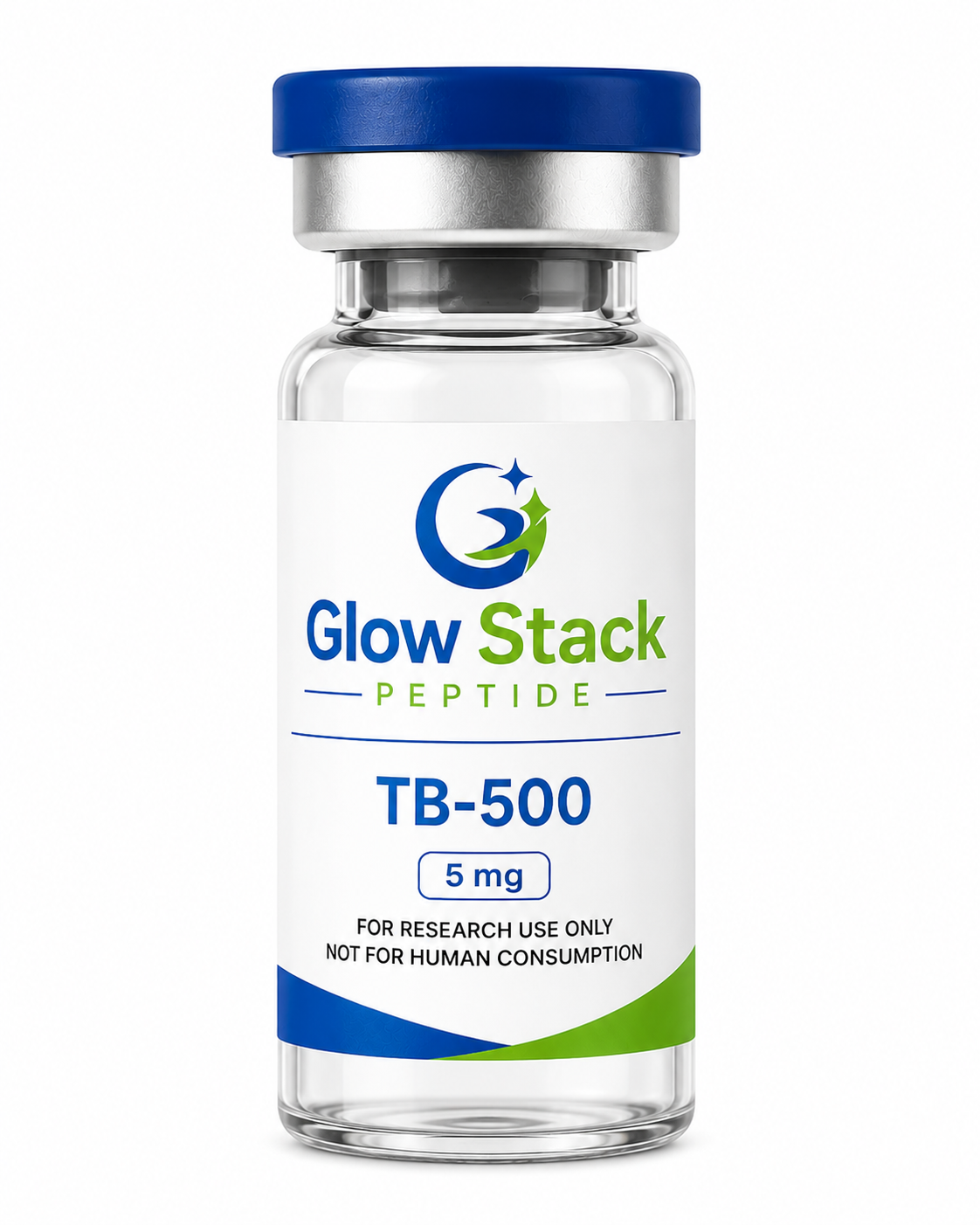
2. TB-500
TB-500 is a synthetic fragment of Thymosin Beta-4, a naturally occurring protein involved in cell migration and tissue organization. Where BPC-157 is studied for localized response, TB-500 is investigated for more systemic effects: how cells move to where they’re needed and how tissue reorganizes during repair.
That difference is the whole point of running the two together. In the literature they’re often described as complementary: one peptide tied to localized vascular and tissue response, the other to broader cellular movement and flexibility. Studied as a pair, researchers are looking at recovery as a coordinated process rather than a single mechanism.
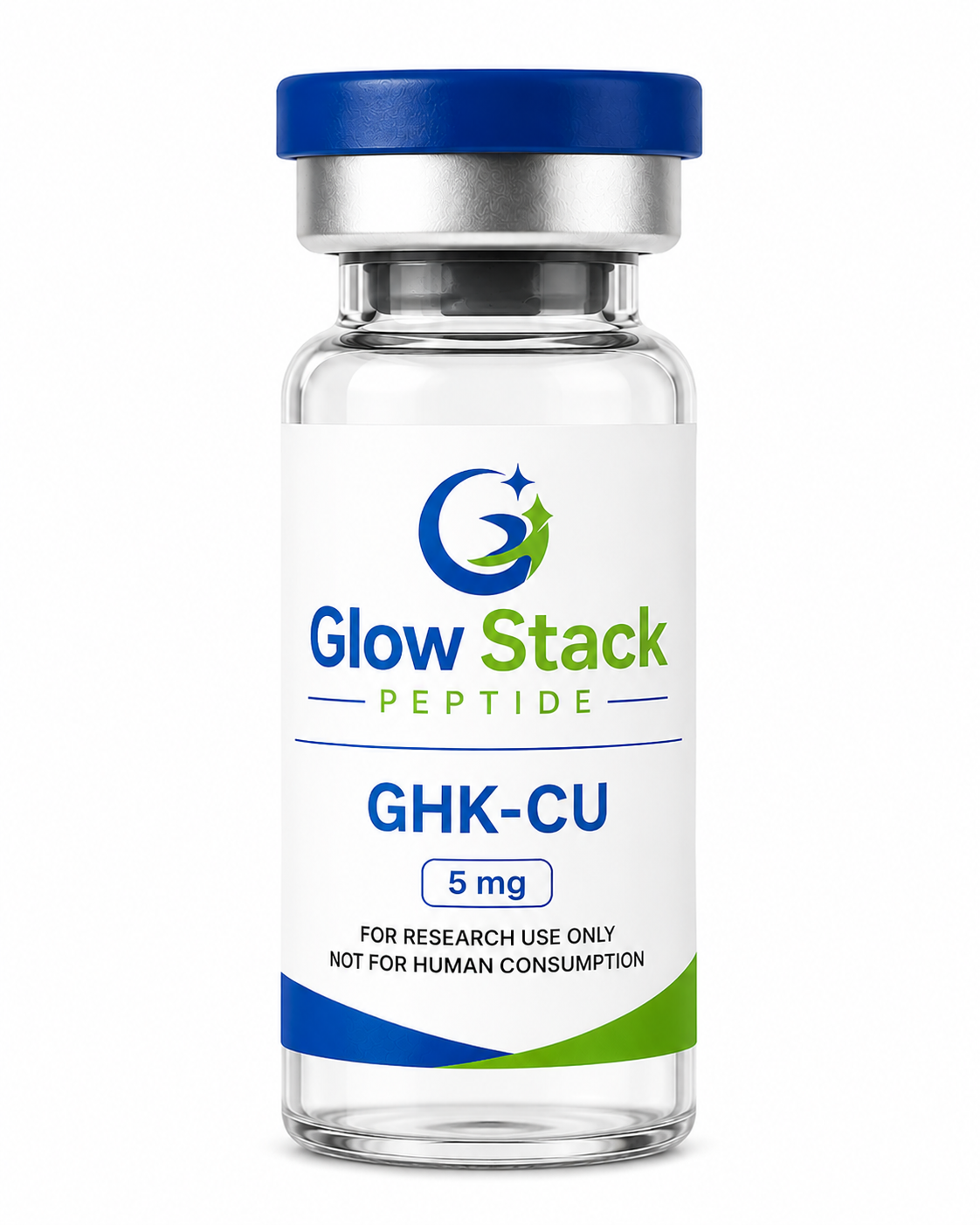
3. GHK-Cu
Investigated for downstream effects on collagen synthesis and skin remodeling, the visible “glow” the stack is named for.
GHK-Cu is the one that puts the glow in Glow Stack. It’s a naturally occurring copper-binding tripeptide that declines in the body with age, and it’s been studied for decades, long before peptides were a trend. The research focus is skin: collagen synthesis, remodeling of the extracellular matrix, and the visible markers tied to skin quality and tone.
It also has one of the longest cosmetic-research histories on this list, which is why it shows up in serums and topical formulations. In the stack, GHK-Cu covers the skin and appearance angle that BPC-157 and TB-500 don’t directly address. Together, the three span repair, recovery, and appearance, the full surface area the “GLOW” shorthand was coined to describe.